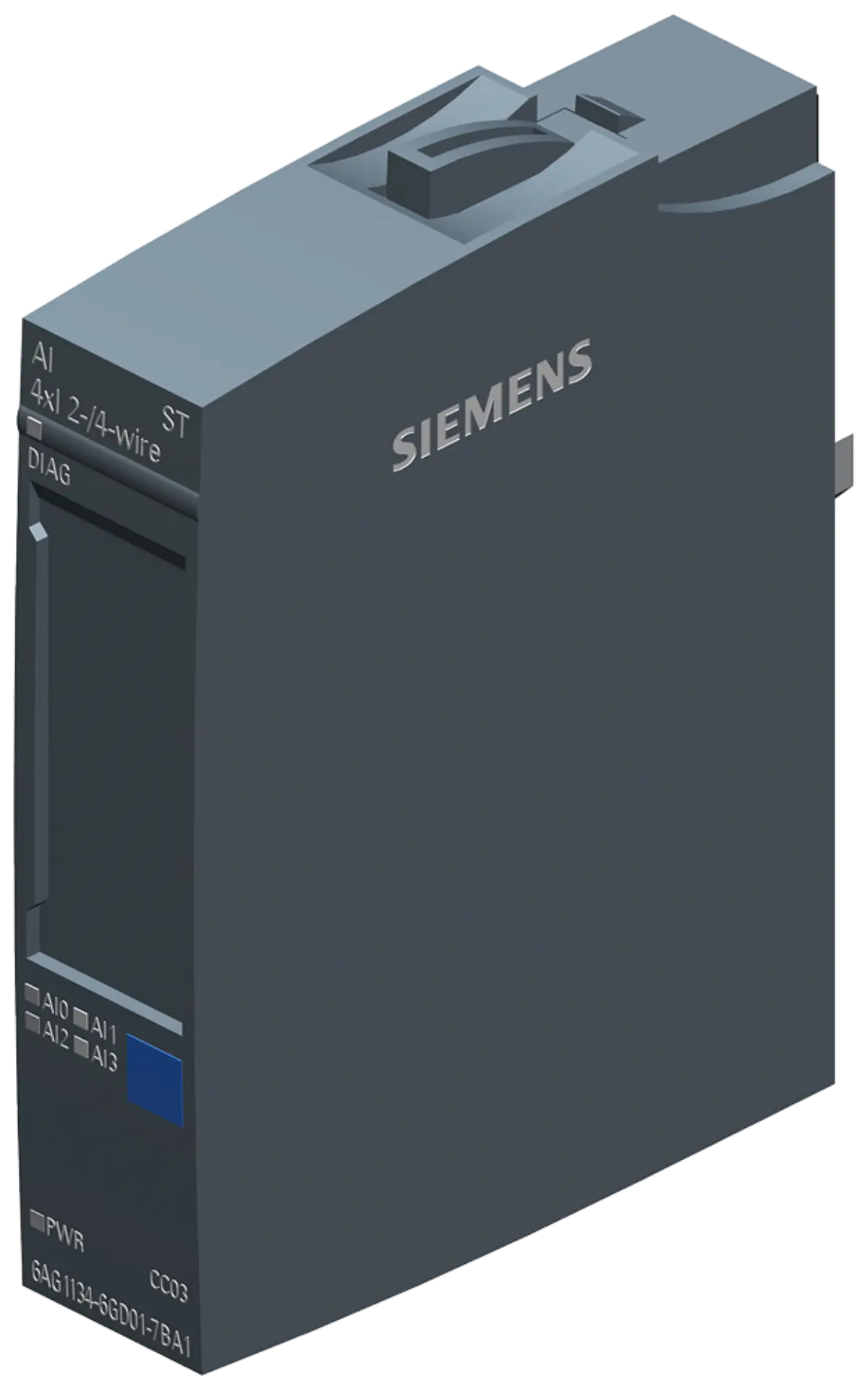
6AG1134-6GD01-7BA1 SIPLUS Analog Input Module Details
This listing presents the Siemens 6AG1134-6GD01-7BA1, an analog input module designed for harsh industrial environments. The unit features conformal coating and extended temperature tolerance for reliable operation.
Quick Facts
- Part number
- 6AG1134-6GD01-7BA1
- Brand
- Siemens
- Category
- I/O Modules
- Product type
- I/O Modules
- Lifecycle
- Active Product
- Dimensions
- 7.7 x 6.8 x 2.5 cm
- Net weight
- 0.04 Kg
- Source category
- SIPLUS analog inputs
Product Overview
The Siemens 6AG1134-6GD01-7BA1 is an analog input module within the SIPLUS ET 200SP series. It provides specialized signal processing capabilities for demanding industrial applications requiring robust performance.
This specific model is based on the standard 6ES7134-6GD01-0BA1 design but includes enhanced protective features. The conformal coating ensures durability against environmental factors during continuous operation.
Technical Review Notes
- The module supports four current inputs configured for two-wire or four-wire connections. This flexibility allows integration with various sensor types in industrial control systems.
- Operating temperatures range from -40°C to +70°C, exceeding standard industrial limits. The extended range ensures functionality in extreme thermal conditions without performance degradation.
- Signal resolution is recorded at 16 bits for precise data acquisition. Accuracy is maintained within +/-0.3% of the measured value for consistent monitoring results.
- Module diagnostics are included to assist in identifying operational anomalies. This feature supports proactive maintenance strategies by providing detailed status information during runtime.
- Physical dimensions are listed as 7.7 x 6.8 x 2.5 centimeters. The compact form factor facilitates installation in space-constrained control cabinet layouts.
- Net weight is documented at 0.04 kilograms for logistical planning purposes. The lightweight construction aids in handling and mounting procedures during assembly phases.
Model Identification
- The part number 6AG1134-6GD01-7BA1 identifies this specific SIPLUS variant. It distinguishes the coated version from standard uncoated equivalents in the product catalog.
- Color code CC03 is associated with this particular module configuration. This identifier helps in visual recognition and inventory management within automated systems.
- The base model reference 6ES7134-6GD01-0BA1 indicates the underlying hardware platform. The SIPLUS designation confirms the addition of environmental protection layers.
- Product lifecycle status is recorded as Active Product in manufacturer databases. This classification suggests ongoing support and documentation review details for engineering teams.
Technical Parameters
| Product type | I/O Modules |
|---|---|
| Lifecycle | Active Product |
| Dimensions | 7.7 x 6.8 x 2.5 cm |
| Net weight | 0.04 Kg |
| Source category | SIPLUS analog inputs |
Parameters are factual source fields retained for model review.
Parameter Review
- Input type is specified as analog current measurement for process variables. Engineers should verify signal ranges match connected transducer outputs before integration.
- Wiring configuration supports both two-wire and four-wire setups. System designers must ensure terminal block assignments align with chosen wiring topology.
- Accuracy specification of +/-0.3% applies under defined operating conditions. Calibration procedures may be required to maintain precision over extended service periods.
- Temperature rating of -40°C to +70°C defines the operational envelope. Installation locations must avoid direct heat sources or cold drafts affecting stability.
- Diagnostic functions provide status updates for module health monitoring. Integration with higher-level controllers enables automated alert generation for fault conditions.
Catalog Classification
Image & Label Review
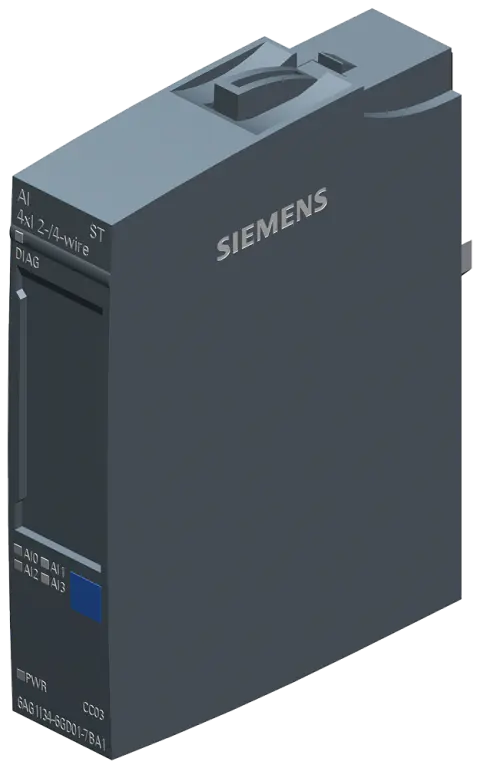
- Product images typically display the front face with terminal blocks visible. Labeling includes the full part number for easy identification during inspection.
- Side views may show the DIN rail mounting mechanism details. Proper alignment ensures secure attachment to standard profile rails in control panels.
- Close-up shots often highlight the conformal coating texture on housing surfaces. This visual confirmation assists in verifying the specific SIPLUS variant received.
- Dimensional diagrams accompany images to provide scale references for planners. These visuals help estimate space requirements within existing cabinet configurations.
Product Image Gallery
Inquiry Preparation
- Review project documentation to confirm signal type requirements for inputs. Matching sensor specifications ensures optimal performance from the analog input module.
- Verify environmental conditions at the installation site for temperature extremes. The -40°C to +70°C range must encompass all operational scenarios.
- Check controller application context for diagnostic data exchange protocols. Integration with the automation system requires correct software configuration and parameter setting.
- Prepare technical questions regarding mounting orientation and wiring diagrams. Clarifying these details early streamlines the engineering review process significantly.
Category Context
This module belongs to the broader ET 200SP distributed I/O family. The series offers modular scalability for complex automation architectures.
SIPLUS products specialize in enhanced environmental protection for industrial use. This category focuses on modules designed for challenging operational settings.
Review Notes
- Confirm the exact part number matches the project specification sheet. Minor variations in suffix codes can indicate different environmental ratings or features.
- Assess the need for additional shielding in high-interference environments. Signal integrity may require careful cable routing alongside power lines.
- Evaluate the impact of temperature fluctuations on measurement accuracy. While rated for wide ranges, extreme shifts might affect long-term stability.
- Document all installation parameters for future maintenance reference records. Keeping detailed logs aids in troubleshooting and component lifecycle management effectively.
Related products
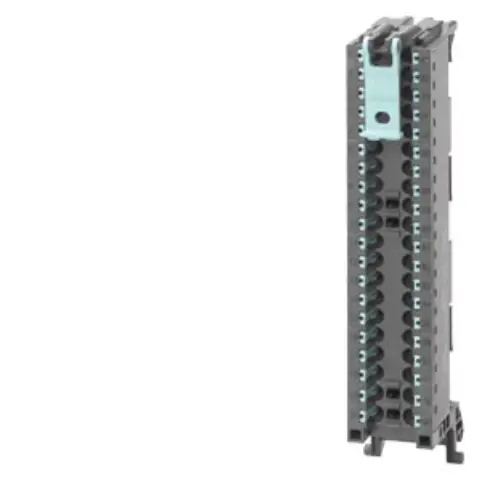
Inquiry for Siemens 6ES7592-1BM00-0XB0 Front Connector
- Part No.
- 6ES7592-1BM00-0XB0
- Category
- I/O Modules
- Product type
- Front connectors
- Lifecycle
- Active Product
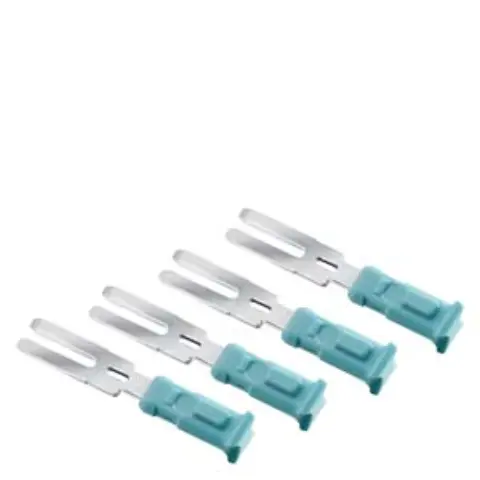
Inquiry for Siemens 6ES7592-3AA00-0AA0 Potential Bridge
- Part No.
- 6ES7592-3AA00-0AA0
- Category
- I/O Modules
- Product type
- SM 522 digital output modules
- Lifecycle
- Active Product
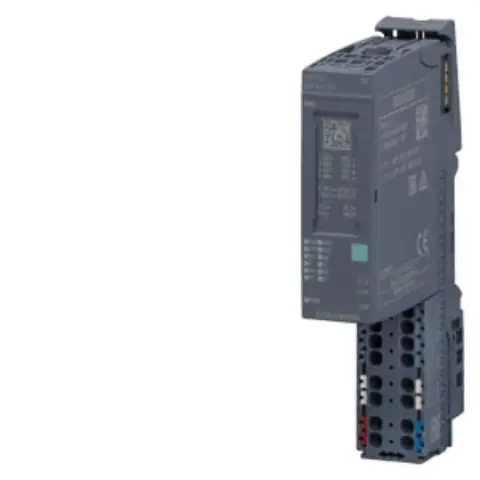
Siemens 6FE1242-6TM10-0BB1 SIMATIC ET 200SP TM ECC Module Inquiry
- Part No.
- 6FE1242-6TM10-0BB1
- Category
- I/O Modules
- Product type
- SIMATIC ET 200SP TM ECC 2xPWM ST Chargecontroller f
- Lifecycle
- Active Product
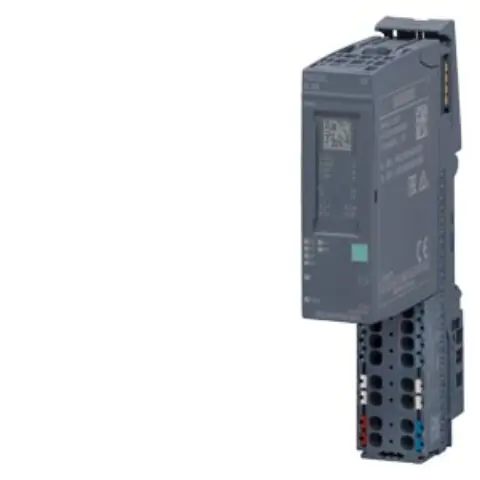
Siemens 6FE1242-6TM20-0BB1 SIMATIC ET 200SP Load Controller Inquiry
- Part No.
- 6FE1242-6TM20-0BB1
- Category
- I/O Modules
- Product type
- I/O Modules
- Lifecycle
- Active Product